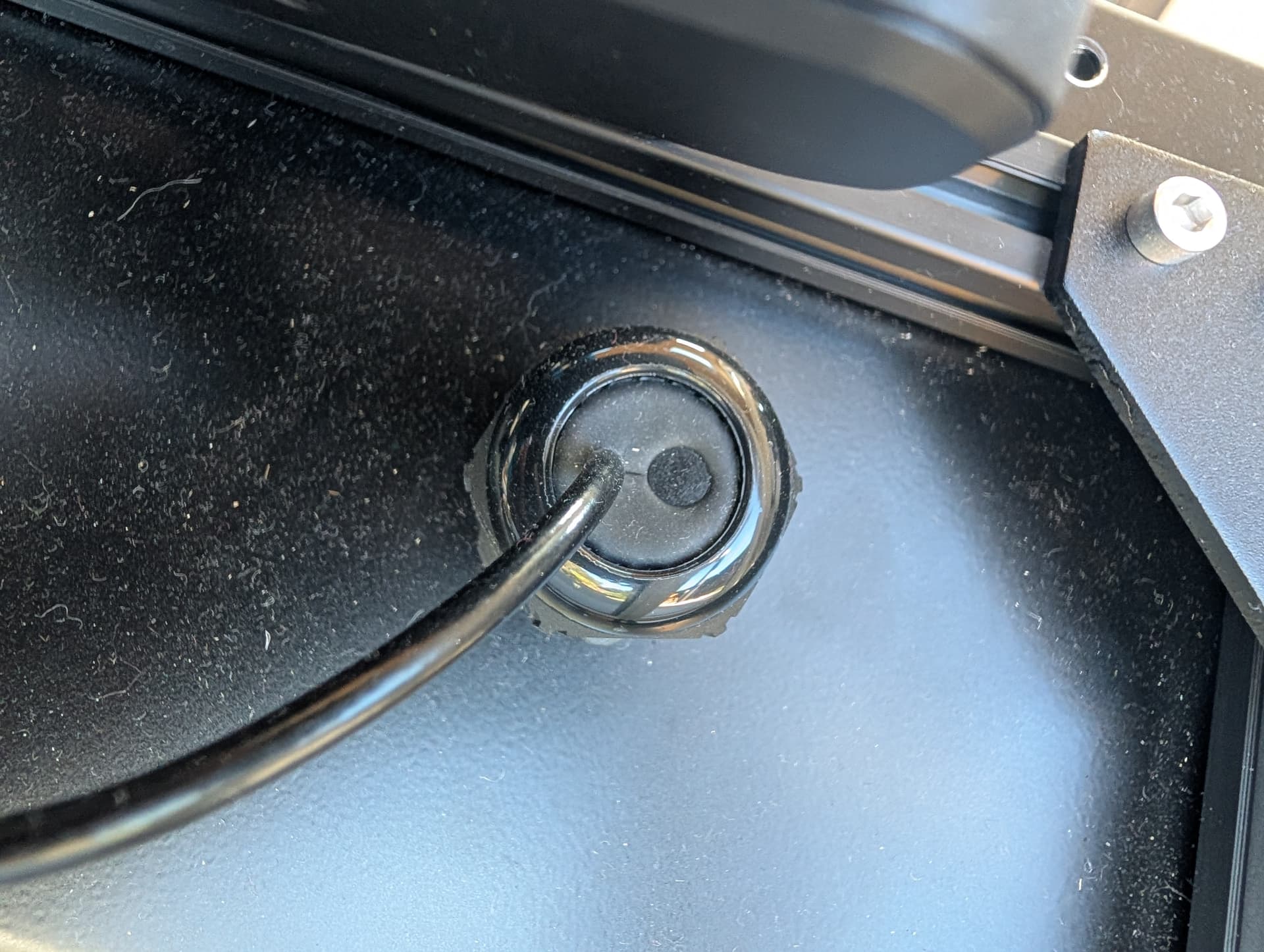
I got a Husarion Lynx, which arrived with a single cable coming out of it for a camera. I’d like to install a lidar and GPS antenna as well. Do I just punch holes in the little piece of rubber and run the new cables through? (I’m not quite sure the of term - maybe it’s a grommet?) I want to be sure I don’t impact the IP67 rating of the robot
I also wonder how many cables I can run through this port. I may eventually want to eventually install quite a number of sensors on the robot and it looks like the existing port would fit a somewhat limited number. How many can I run through this single port? What do I do when I max it out?
The cables from the User Compartment pass through cable glands (sometimes referred to as grommets). These glands contain a rubber sealing insert that compresses around the cable to maintain the enclosure’s IP54 or IP66 rating.
Because of this sealing mechanism, we do not recommend simply punching additional holes in the rubber insert. Doing so can compromise the compression seal and negatively affect the IP54 or IP66 protection.
Each cable gland is designed for:
Multi-hole inserts are available, but using a single-hole insert for multiple cables is not recommended, as it will reduce sealing effectiveness.
If you plan to install additional sensors the correct solution is:
-
Drill an appropriately sized hole in the cover.
-
Install an additional properly rated cable gland.
-
Ensure the gland matches the cable diameter.
-
Tighten to the manufacturer’s torque specification to maintain IP protection.
Often within this process you must insert the wire through the gland first, and then cramp the connectors on the wires.
This is the only reliable way to preserve the enclosure rating.
Feel free to check examples of cable glands and multi-cable inserts.
Regards, Husarion Team
1 Like
Thank you. The cable gland that came with my robot appears to have a pre-scored location for a second hole.
To use that hole do I drill a hole the same width as the pre-scored location?
Does the cable need to be exactly the same size as the hole or a bit larger?
If I want three cables, rather than drilling a hole for a new cable gland, can I just get a new rubber insert with three holes? Would I need a rubber insert from the same company that Husarion chose for the cable gland or are these relatively standardized such that any rubber insert would work?
I’m also wondering how to get the cable into the hole since it has a connector on either side that’s larger than the cable itself
The pre-scored location is part of the insert and should not be drilled. Loosen the cable gland, remove the insert, pop out the membrane, reinstall it, and tighten to the torque specified in the datasheet to maintain proper sealing.
The cable diameter must fall within the clamping range of the insert, please follow datasheets of the insert. It should not be larger than specified, and it should not be too small, otherwise sealing and strain relief may be compromised.
If you need three cables, you can use a 3-hole insert if the gland model supports interchangeable inserts. Inserts are not fully standardized between manufacturers, so it’s best to use one from the same manufacturer/series unless compatibility is confirmed.
Bare cable must be passed through the gland before the connector is crimped.
Please find examples of manufacturer series glands and inserts: LAPP SKINTOP
| Size |
Gland |
Nuts |
Inserts |
| M16 |
53111210 |
53119110 |
53316240, 53316420, 53316230, 53316220 |
| M20 |
53111220 |
53119120 |
53320260, 53320250, 53320340, 53320353, 53611001, 53320440, 53320430, 53320920 |
| M25 |
53111230 |
53119130 |
53325260, 53325450, 53325370, 53325350, 53325360, 53325640, 53325540, 53325250 |
You may also find LAPP Tannehill video about cable glands.
1 Like
Thank you so much for the help. I have one last question.
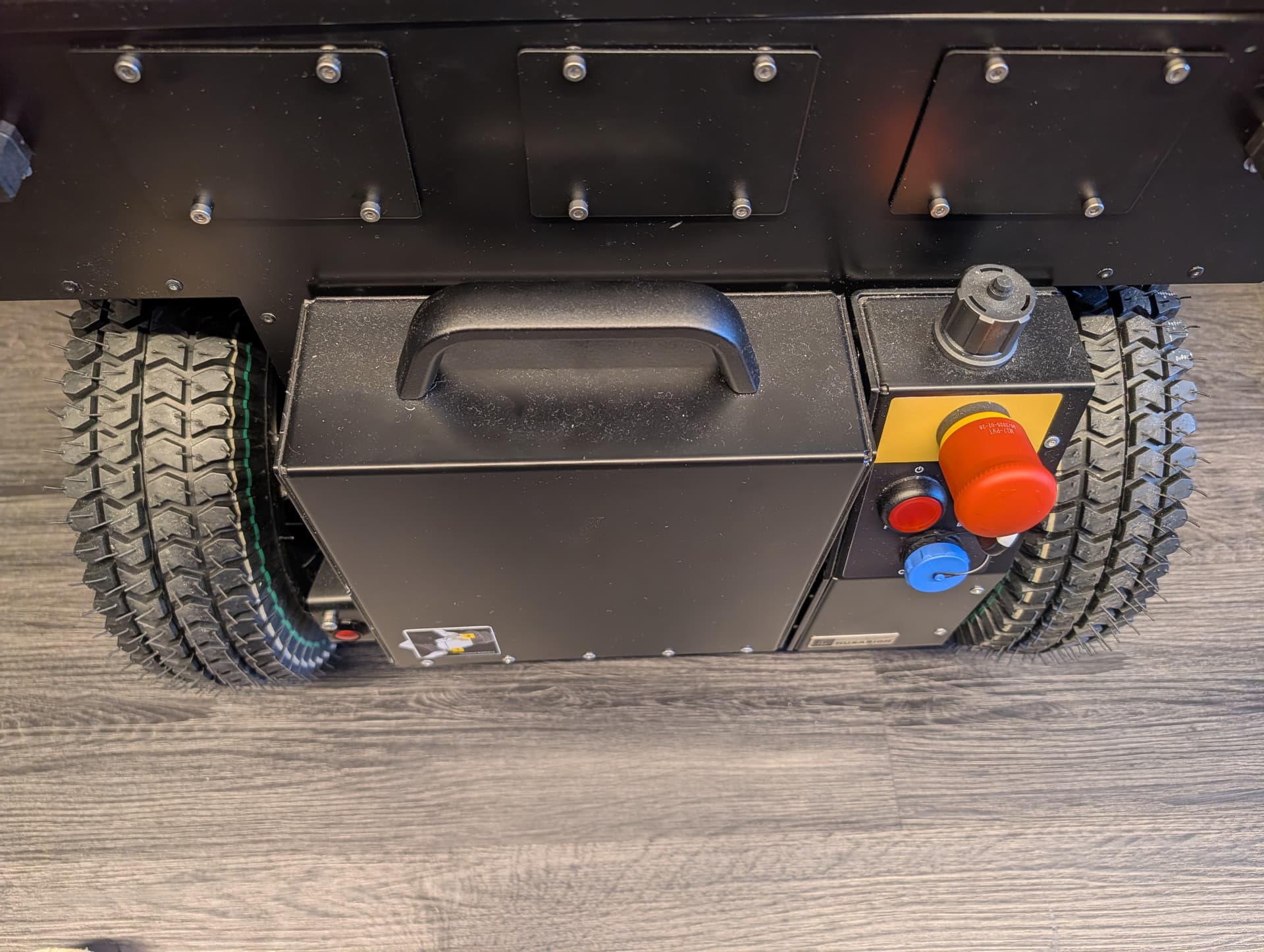
Can you tell me what these three cut outs covered by the three metal plates are for? I’m curious if they might be meant to accommodate a specific cable entry system or bulkhead connector
These are custom cut-out plates designed to provide easier access for cable routing and management. The idea is that the plate can be removed, allowing you an easier installation of an appropriate cable gland on the plate.
Regards Husarion Team